Fenway's Condo Prices Are Down. The New Financing Rules Decide If That Matters
Ask around Fenway-Kenmore this summer and you'll hear the same read on the market: prices came down, so now is the time. MLS-tracked sales data through early June 2026 shows the average Fenway condo closing at $996,000, down from $1.08 million over the same stretch a year earlier. That's a real number, and it's the one getting repeated at open houses.
It's also the wrong number to anchor an investment decision to right now. On August 3, 2026, Fannie Mae and Freddie Mac quietly rewrote how every condo loan application in the country gets underwritten, and the change has almost nothing to do with price. It has to do with whether the building itself can still get financed at all.
Fannie Mae issued Lender Letter LL-2026-03 in March, with Freddie Mac publishing a matching bulletin the same day. Most of the coverage focused on a headline number: the minimum share of a condo association's budget that has to go into reserves is rising from 10 percent to 15 percent. That part doesn't take effect until January 4, 2027, and it's worth tracking, but it's not the change that's already reshaping deals.
The part that took effect three weeks ago is quieter and more immediate. Lenders can no longer use the streamlined Limited Review process on established condo buildings with more than ten units. Every one of those buildings now goes through Full Review, which means an underwriter is looking at the association's reserve study, its funding method, its insurance coverage, and any pending special assessments before your loan can close. And if the association is running on baseline funding, the method that lets a reserve balance drift toward zero between projects, that funding method no longer counts as adequate evidence, full stop. Lenders have long required the reserve study itself to be dated within the last 36 months, but that standing rule now gets checked on every one of these buildings instead of being waved through under Limited Review.
There's a second piece that cuts the other way. Fannie Mae eliminated its 50 percent cap on investor-owned units in a building. That cap used to block financing outright in buildings where more than half the units were rentals, which described a meaningful share of Fenway-Kenmore's stock given how many buyers there are purchasing specifically to rent to Longwood Medical Area staff or students. That restriction is gone now, immediately, which is genuinely good news for exactly the kind of building this neighborhood is full of.
So the rule didn't get uniformly harder or easier. It got more specific. And specificity is exactly what a headline price drop can't tell you.
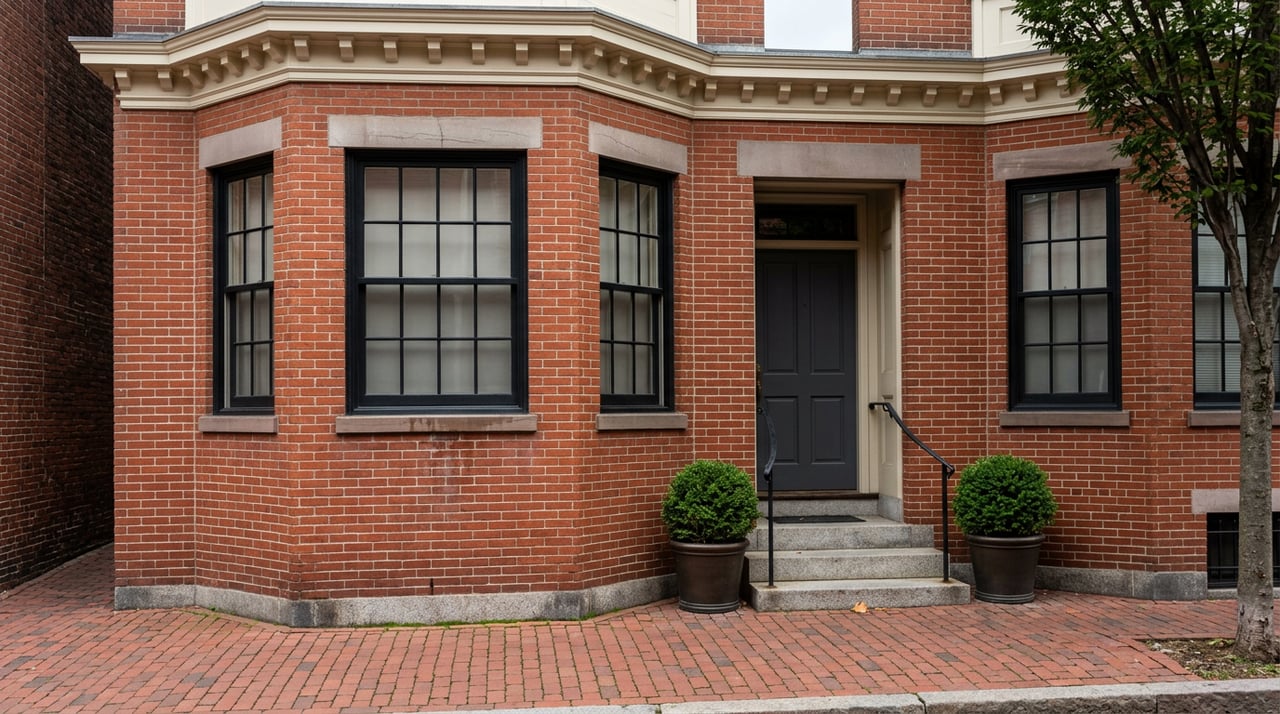
Fenway-Kenmore's condo stock skews toward smaller, older, converted buildings. Boutique elevator conversions, turn-of-the-century brownstones cut into units, buildings named things like Fenwest, Braemore, or XII Stoneholm rather than corporate-branded towers. That's part of the appeal. It's also exactly the profile most likely to have skipped a formal reserve study altogether, because Massachusetts never required one.
Massachusetts General Laws Chapter 183A, Section 10(i) is the only state-level requirement, and it's brief:
All condominiums shall be required to maintain an adequate replacement reserve fund, collected as part of the common expenses and deposited in an account or accounts separate and segregated from operating funds.
That's it. No mandated study, no defined percentage, no state audit. "Adequate" is left to the board. For years, that ambiguity didn't matter much because lenders weren't checking closely on established buildings. Now they are, on every building over ten units, and an association that's been keeping dues low for its renter-heavy ownership base by underfunding reserves is going to find that out at the worst possible moment: mid-transaction, with a buyer's financing on the line.
Here's the part that changes how you should think about that $996,000 average. It isn't a Fenway-specific correction. Citywide condo medians across Boston were sitting between $725,000 and $750,000 through the first half of 2026, down roughly 2 to 3.3 percent year over year, while condo inventory climbed sharply, with different trackers putting the year-over-year increase anywhere from 15 to 37 percent depending on the month measured. Single-family inventory stayed tight through the same period, which is the real driver: rate-sensitive condo buyers got more room to negotiate across the entire city, not just in one neighborhood.
Put plainly, Fenway's price movement looks like the rest of Boston's condo market catching a breath, not like a neighborhood-specific opportunity. Citywide snapshots from August 2026 back this up. One live-MLS tracker put Boston's median list price at $869,000 with 4.3 months of supply, calling it a balanced market. A separate read using Movoto data and published in Boston Agent Magazine's August 20 report showed the city's broader median list at $1.14 million, down 4 percent year over year, with listings sitting a median of 67 days. The 30-year fixed rate averaged 6.66 percent at the end of July, per Freddie Mac, which explains why buyers are pickier than they were two years ago.
None of that tells you anything about the specific building you're underwriting. That's the point. The discount is real and it's citywide. The financing risk is building-specific. Confusing the two is how an investor overpays for a unit that can't actually close on schedule.
The documents that used to be a formality are now the deciding factor. Before you get attached to a unit, ask the listing agent or the association's management company for three things.
A professional reserve study in Massachusetts typically runs $2,500 to $10,000, with Greater Boston buildings landing toward the higher end given local labor costs. That's a real expense for a small association, which is part of why some skip it. It's also cheap compared to what it protects against. Boston's building stock carries specific wear that a generic national reserve model won't catch: ice dams cut the typical life of an asphalt shingle roof to roughly 18 to 22 years here, against a 25-year national average, and the slate roofs common on older Boston and Brookline buildings need a full "lift and relay" every 40 to 50 years when the copper flashing underneath fails, even though the slate itself can outlast the building. Those are exactly the line items a current, honest reserve study accounts for and a stale one doesn't.
None of this changes why Fenway-Kenmore works as a rental market in the first place. The neighborhood sits inside walking distance of the Longwood Medical Area, Boston University, Northeastern, Berklee, MassArt, and Wentworth, which is a demand base that doesn't disappear when financing rules tighten. The city has also been steadily improving the neighborhood's walkability on its own timeline: the first two segments of the Fenway Path, connecting Fenway Station to Maitland Street, were completed in 2022 and 2023, with a final phase still planned to extend the path under Park Drive to the Emerald Necklace.
The opportunity in Fenway-Kenmore right now is real. It just belongs to buyers who clear the building-level diligence, not to buyers chasing the headline number.
Does this rule affect me if I'm paying cash? Not directly. Fannie Mae and Freddie Mac only touch conventional financing. But the building's warrantable status still shapes your resale, because most future buyers of that unit will need a loan, and a non-warrantable building shrinks that pool.
What about a small building, like a six-unit brownstone conversion? That's actually where the news is better. Fannie Mae expanded its waiver of project review specifically for condo projects with ten or fewer units, which describes a good share of Fenway-Kenmore's older conversions. Smaller can mean an easier path here, not a harder one.
Does this apply if I already own the condo and I'm refinancing? Yes. The new standards apply to any loan application dated on or after August 3, 2026, and that includes refinances and cash-out requests on existing rental units, not just new purchases.
If you're weighing a Fenway or Kenmore condo as an investment, the price is only half the underwriting. Matthew Langlois works with investors across Boston and the South Shore who need someone reading the reserve study and the board minutes before the offer goes in, not after. Schedule a free consultation to walk through a specific building before you commit to one.


From start to finish, Matthew will be your advocate, ensuring a smooth transaction that fits your timeline. He has a genuine love for what he does and takes pride in helping his clients achieve their goals.