Milton Homes for Boston Commuters Seeking More Space
If you want a single-family home near Boston, you already know the trade-off can feel tough. You want a practical commute, enough space to settle in, and a town that feels residential without feeling disconnected. Milton stands out because it offers all three, with direct highway access, rail-connected transit, and a housing market known for character and long-term appeal. Let’s dive in.
Milton sits just south of Boston, and its location is a big part of its appeal. According to the town, you have quick access to I-93, Route 128, and I-95, which can make commuting by car more manageable whether you work downtown, in the inner suburbs, or farther south.
Transit access also helps Milton compete with other commuter towns. The town’s main rail-connected option is the Mattapan Trolley, which connects to the Red Line at Ashmont. For buyers who want public transit access without choosing a denser neighborhood closer to the city core, that is a meaningful advantage.
Milton’s commuter identity is not a recent selling point. The town notes that railroad and streetcar service helped shape Milton as a place where people could live outside Boston and still travel in for work, and that pattern continues today through the Mattapan line corridor.
If your work week is not the same every day, Milton’s road access can be especially useful. Quick connections to major highways can support commuting into Boston, reaching suburban office locations, or managing a schedule that changes from day to day.
That flexibility matters for many buyers today. A town that supports both city access and regional travel can make single-family living more practical, especially if your household has more than one commuter pattern to juggle.
For buyers who prefer a transit option, Milton’s Mattapan Trolley link to the Red Line is part of the value story. It gives you a public transit connection to Boston while letting you live in a town that feels more suburban than many closer-in alternatives.
That does not mean Milton functions like a dense transit hub. Instead, it offers a more balanced setup, with local residential streets, village-scale commercial areas, and a transit path into the city when you want it.
One of Milton’s clearest advantages is its amount of conserved land. The town says it has the most privately and publicly conserved land within 20 miles of Boston, which helps explain why it often feels quieter and less dense than other towns with similar proximity to the city.
That difference shows up in day-to-day life. You can be close to Boston while still having access to tree-lined streets, open space, and a more traditional suburban setting.
Blue Hills Reservation is one of Milton’s biggest lifestyle draws. Mass.gov describes it as a regional reservation of more than 7,000 acres with about 125 miles of trails, and Houghton’s Pond adds swimming, hiking, fishing, and beach access.
For many single-family buyers, that kind of nearby recreation is more than a bonus. It can be a real part of how you use the town, especially if you want access to outdoor space without planning a full weekend trip.
Milton is not built around a large commercial core, but it does have practical local centers. The town identifies Milton Village and East Milton Square as its main commercial areas, giving residents places for errands, dining, and everyday needs close to home.
That smaller-scale commercial setup is part of Milton’s appeal. You get convenience, but the town still reads as primarily residential rather than heavily built up.
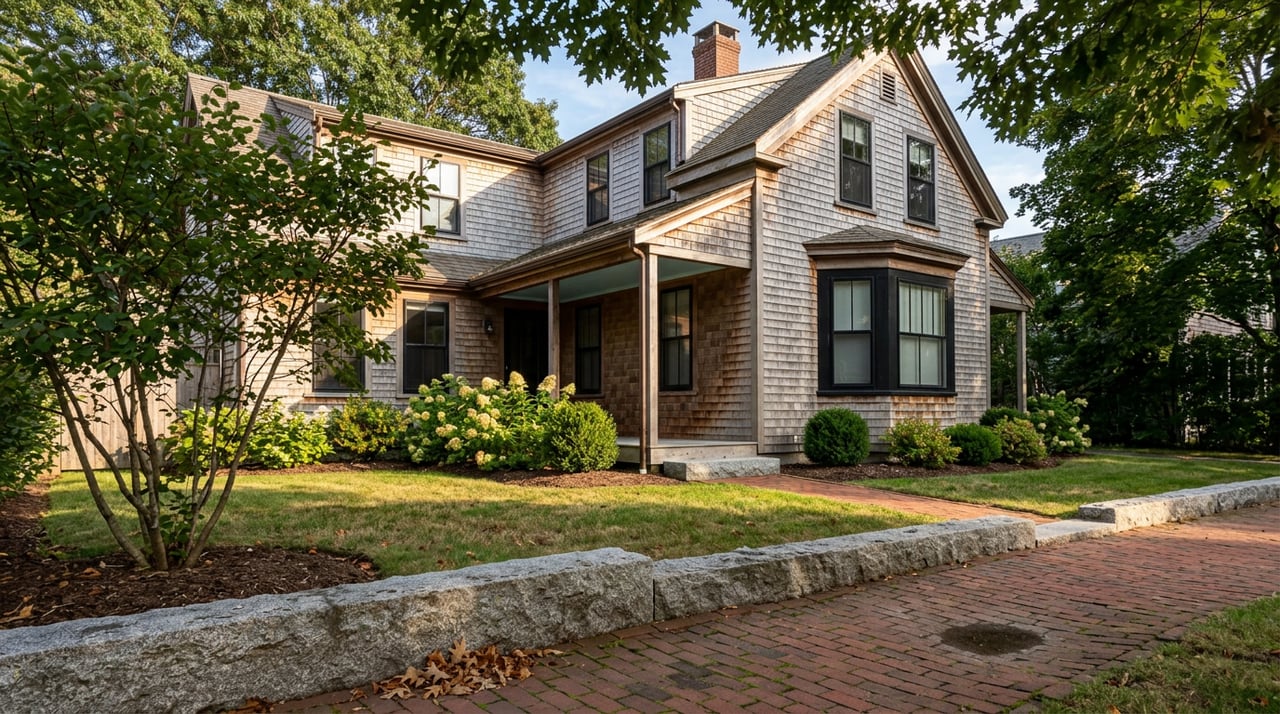
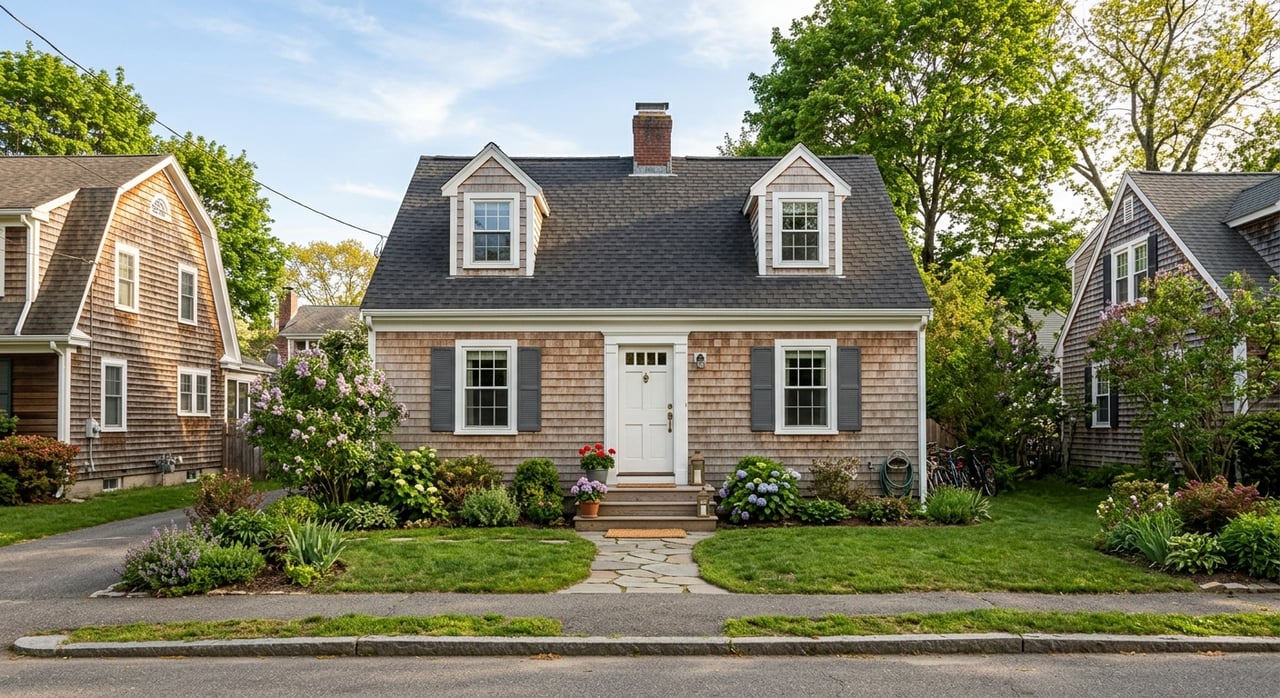
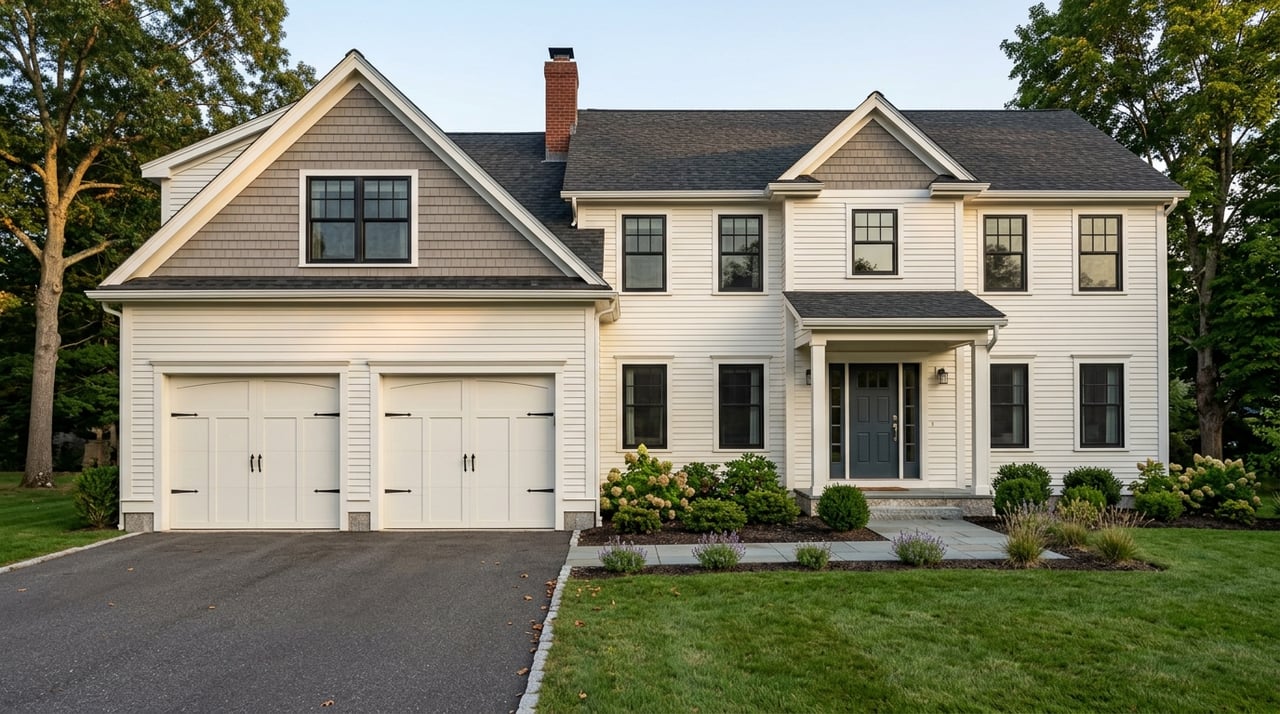
If you are searching for a single-family home, Milton offers more variety than many buyers expect. The town’s historic district and history materials point to a wide mix that includes late 18th- and early 19th-century homes, Greek Revival architecture, older worker housing, large suburban houses, country estates, and architect-designed properties.
In practical terms, that means Milton is not a one-style market. Depending on the area and price point, you may find everything from a smaller older home to a larger estate-style property, with plenty of in-between options.
Some buyers are not just comparing square footage or commute routes. They are also looking for a home and town with a distinct sense of place, and Milton tends to deliver that through its layered housing stock and long development history.
That character can matter if you want something more specific than a typical suburban subdivision feel. In Milton, the housing mix is one reason the town continues to attract buyers who are willing to pay a premium for location and setting.
Milton is firmly in the premium category among Boston-area commuter towns. Redfin reports a median sale price of $1,004,399 over the three months ending May 2026, with homes selling in about 20 days and receiving about 4 offers on average.
Zillow reports an average home value of $1,103,390, with 53 homes for sale, a median list price of $1,131,333, and homes pending in about 7 days. Taken together, those numbers point to a market that remains active, expensive, and competitive.
Current single-family listings at the time of research stretched from the mid-$500,000s into the multimillion-dollar range. Examples included homes around $549,000, $749,000, and $879,900, along with listings near $1.2 million and estate-style offerings at $4.495 million, $7.8 million, and $14.5 million.
That range is important because it shows Milton is not only a luxury market. There are lower entry points, but the center of gravity is still around the $1 million mark and above.
When homes move in about 20 days and attract multiple offers on average, preparation matters. If you are buying in Milton, it helps to understand that desirable single-family homes may not sit on the market long.
That does not mean every home follows the same pattern. It does mean you should expect a market where pricing, condition, and timing all play a meaningful role.
If you are deciding whether Milton is worth the premium, it helps to compare it with other South Shore and Boston-adjacent commuter towns. Based on current median sale prices from Redfin, Milton is priced above Braintree, Quincy, Canton, and Weymouth Town.
That price gap reflects a trade-off many buyers weigh carefully. In simple terms, Milton tends to cost more, but it offers a closer-in suburban setting, significant conserved land, and a distinctive single-family housing mix.
Redfin shows Braintree with a median sale price of $714,572 and homes selling in about 20 days. The town’s 2026 statement notes that a major MBTA Red Line rapid transit line originates in Braintree and that the three spurs of the Old Colony commuter rail line merge there.
For buyers focused on strong transit access at a lower price, Braintree can be a practical alternative. Milton, by contrast, tends to appeal more to buyers who prioritize setting and housing character along with commute convenience.
Quincy had a median sale price of $654,608, with homes selling in about 21 days. Redfin also gives Quincy a 63 Walk Score and a 47 Transit Score, reinforcing its more urban and transit-oriented profile.
That can work well if your top priority is access and a more built-up environment. If you want a more purely suburban feel with more conserved land, Milton usually occupies a different lane.
Canton posted a median sale price of $729,563, with homes selling in about 26 days. The town’s Route 138 transportation study says Canton has two commuter rail stations on the Providence/Stoughton Line, with peak-period frequency of roughly 20 to 30 minutes.
Canton is often a relevant comparison for buyers who want suburban space and rail access. Milton tends to draw buyers who prefer its Boston-adjacent location and Red-Line-connected transit option through Mattapan and Ashmont.
Weymouth Town had a median sale price of $614,632, and Zillow reported 113 homes for sale with homes pending in about 7 days. The town says it has three MBTA commuter rail stations, with travel times to South Station of about 30 to 35 minutes.
If budget is the main driver, Weymouth stands out as a lower-cost option in this group. Milton is the stronger fit if you are willing to spend more for proximity, open space, and a more distinctive housing profile.
Milton tends to make the most sense for buyers who want a single-family home near Boston and are comfortable paying for a premium location. It is especially compelling if you want a residential setting, access to major roads, a transit connection into the city, and nearby outdoor space that feels built into daily life.
It may also appeal to you if you value housing character. Milton’s mix of older homes, larger suburban properties, and estate-style residences gives the market a look and feel that is harder to replicate in many nearby towns.
If you are weighing Milton against other commuter towns, the key question is simple: do you want the lower price point, or do you want the closer-in suburban setting and distinct town character that Milton offers? If you want help understanding how Milton fits into your options across Greater Boston and the South Shore, Matthew Langlois can help you evaluate the market with clear, practical guidance.
From start to finish, Matthew will be your advocate, ensuring a smooth transaction that fits your timeline. He has a genuine love for what he does and takes pride in helping his clients achieve their goals.