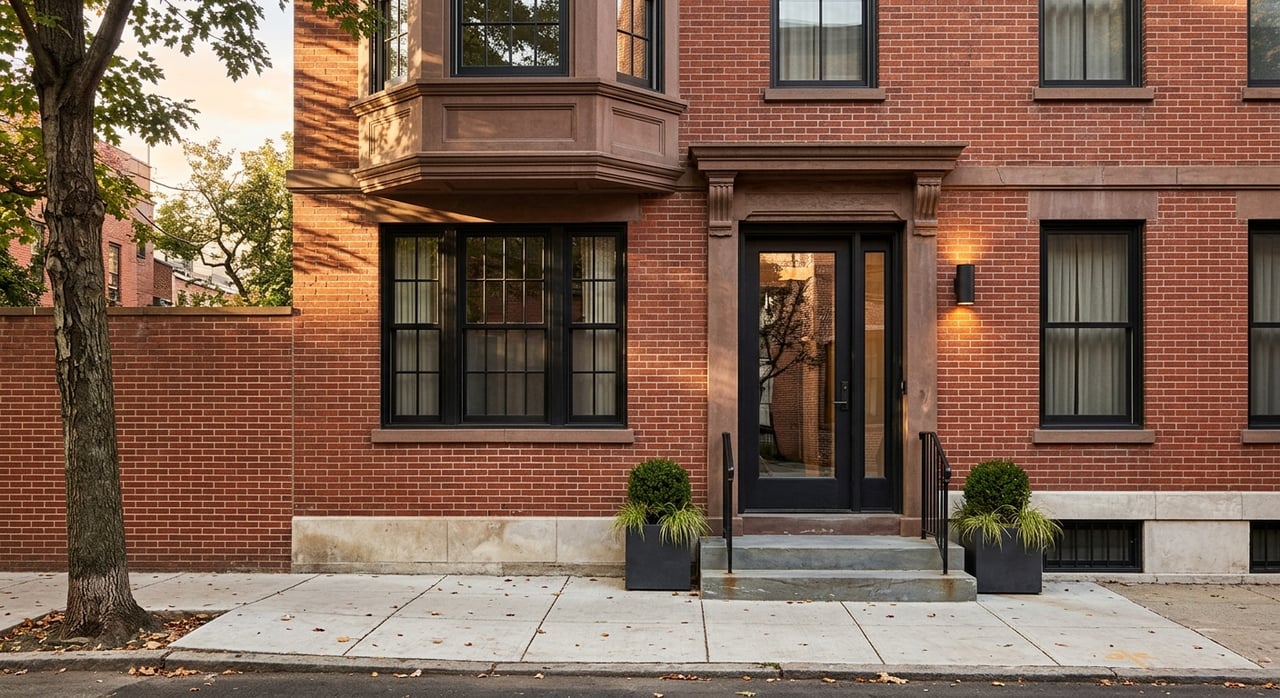
Boston Condo Investing Strategy Beyond Student Rentals
If you think Boston condo investing begins and ends with student rentals, you may be overlooking some of the market’s most durable demand. In several Boston neighborhoods, renter demand is shaped not just by colleges, but by hospitals, research centers, transit access, and year-round employment. If you are looking for a more stable long-term rental strategy, this is where a more disciplined, neighborhood-by-neighborhood view can pay off. Let’s dive in.
Boston is a renter-heavy city overall. In 2025, 59.8% of Boston housing was renter-occupied, and that share climbs even higher in several condo-relevant neighborhoods, including Fenway at 84.8%, Mission Hill at 86.4%, Brighton at 77.2%, and Longwood at 71.9%.
That matters because it changes how you should evaluate many condo purchases. In these areas, a condo is often best viewed as an income-producing asset first, with tenant demand driven by everyday work and lifestyle needs rather than only the academic calendar.
Fenway is often associated with student housing, but the neighborhood profile is broader than that. Boston describes Fenway as a mixed residential and commercial district tied to academic institutions, medical institutions, entertainment corridors, and major commercial hubs like Kenmore Square, Lansdowne Street, Brookline Avenue, and Boylston Street.
In 2025, 61% of Fenway residents were enrolled in college or university, which is significant. But Fenway also supports young professionals, long-term renters, and people who want quick access to jobs, services, and transit. For an investor, that means tenant demand is more layered than a simple student-rental story.
Brighton stands out because its renter base is less tied to one specific type of tenant. The city describes it as a neighborhood with families, recent immigrants, students, and young professionals, supported by a housing mix that includes triple-deckers, single-family homes, and brick apartment buildings.
Its 2025 profile shows 59.7% of the population is age 18 to 34, 73.0% of residents age 25 and older have a bachelor’s degree or higher, and 77.2% of occupied housing units are renter-occupied. Major institutions in the area include St. Elizabeth’s Medical Center, Boston College, WGBH, and New Balance, which helps support demand from workers who want access to jobs and neighborhood services.
Longwood is less of a traditional condo neighborhood and more of an employment engine. Boston describes it as a major medical and academic center, and the 2025 profile shows 67.9% of payroll jobs are in healthcare and social assistance.
The Longwood Collective says more than 134,000 people are in the area every day, and Boston’s healthcare page notes that the Longwood Medical Area is part of a regional cluster that includes 25 hospitals and 20 community health centers. For condo investors, nearby residential areas like Fenway, Mission Hill, and adjacent locations can benefit from demand tied to hospital staff, researchers, and graduate students seeking shorter commutes.
Fenway/Kenmore works well if you want a highly urban, transit-oriented rental location. The neighborhood includes a wide range of housing, from brick row houses to newer condo towers, and it offers immediate access to employment centers, retail, and entertainment.
A key data point here is transportation. 62.0% of Fenway households have no vehicle, which suggests many renters will prioritize walkability, transit access, and ease of commuting over extra parking.
If you are considering a condo here, focus on building type and tenant usability. Elevator access, package handling, secure entry, laundry, storage, and practical commuting options can matter more than oversized layouts or parking-heavy product.
You should also pay close attention to noise, building rules, and overall unit function. In a dense neighborhood, small differences in layout and building management can affect rental appeal more than square footage alone.
Brighton often appeals to investors who want a little more flexibility in tenant profile and unit style. Compared with more central Boston neighborhoods, it may offer options that feel more residential while still maintaining access to jobs, institutions, and transit.
It is also less car-free than Fenway. In Brighton, 33.3% of households have no vehicle, which means parking can carry more weight depending on the building and location.
In Brighton, parking rules deserve close review. A deeded space, assigned parking, guest parking policy, or limited street parking situation can influence tenant demand and leasing ease.
You should also compare how different sections of Brighton connect to daily employment centers and services. Buildings with straightforward commuting options and efficient layouts may fit long-term renters better than units with features that look good on paper but create friction in day-to-day living.
If your strategy is to serve renters connected to the medical and academic economy, the Longwood edge deserves a close look. The opportunity is often not inside Longwood itself, but in nearby residential buildings that offer access to the district.
That can include parts of Fenway, Mission Hill, and bordering locations where renters can shorten their commute or use transit and shuttle connections. For a buy-and-hold investor, this kind of location logic can be more reliable than chasing a narrow seasonal rental pattern.
Here, convenience is the product. Look closely at transit access, walkability, elevator service, secure entry, laundry, package handling, and building upkeep.
You should think about how a unit performs for someone with an early schedule, a long shift, or a demanding workweek. In these cases, a well-run building and an easy commute can be just as important as the finishes inside the unit.
In Massachusetts, condominiums are governed by the master condominium documents, the deed, the bylaws, and Chapter 183A. Under that framework, owners must comply with the governing documents, and associations may enforce rules and levy reasonable fines for violations.
For investors, this makes document review essential. You need to confirm whether the building allows leasing, whether there are rental caps, whether there are minimum lease terms, and whether any approval process or use restriction could limit your plans.
Before you close, review:
A condo that looks attractive on the surface can become a weak investment if the association rules do not support stable long-term leasing.
Massachusetts law also requires condo associations to keep important records, including financial records, insurance policies, reserve-fund records, and meeting minutes. The law requires an adequate replacement reserve fund, and buildings with 50 or more units must have an independent CPA review of the financial report annually or at least every two years depending on the building’s vote structure.
That is why investors should review the building budget, reserve strength, delinquency levels, and any upcoming capital needs. A lower purchase price does not help much if the building is underfunded or likely to face major assessments.
Boston requires rental property registration every year by July 1. The city also imposes a penalty for late registration and requires an inspection at least once every five years after registration.
This requirement applies even if the unit is vacant, under renovation, or rented to relatives. If the condo is in a larger complex, the city asks for the total number of units in the complex, and if you live outside Massachusetts, Boston also wants a Boston-area emergency contact.
Many out-of-market buyers assume they can keep a condo as a short-term rental backup plan. In Boston, that is a risky assumption.
The city’s published short-term rental program allows rentals of fewer than 28 consecutive days only in owner-occupied condominiums, single-family homes, two-family homes, and three-family homes. For condos, owner occupancy means the owner lives there at least nine months of the year, and the unit also cannot be subject to any law that prohibits leasing, subleasing, or short-term rental use.
For most Boston condo investors pursuing a non-owner-occupied purchase, short-term rental flexibility should be treated as a bonus only if clearly allowed, not as a core underwriting strategy.
If you want to invest in Boston condos beyond student rentals, the strongest case is usually built on a few simple ideas. Look for neighborhoods with high renter occupancy, clear ties to major employment centers, practical transit access, and condo rules that support stable long-term leasing.
Fenway, Brighton, and the Longwood edge each fit that model in different ways. The right choice depends less on hype and more on whether the building, unit, and governing documents line up with the kind of renter demand you actually expect to serve.
If you want a practical read on Boston condo opportunities, from neighborhood fit to building-level due diligence, Matthew Langlois can help you evaluate options with a clear investor lens.




From start to finish, Matthew will be your advocate, ensuring a smooth transaction that fits your timeline. He has a genuine love for what he does and takes pride in helping his clients achieve their goals.