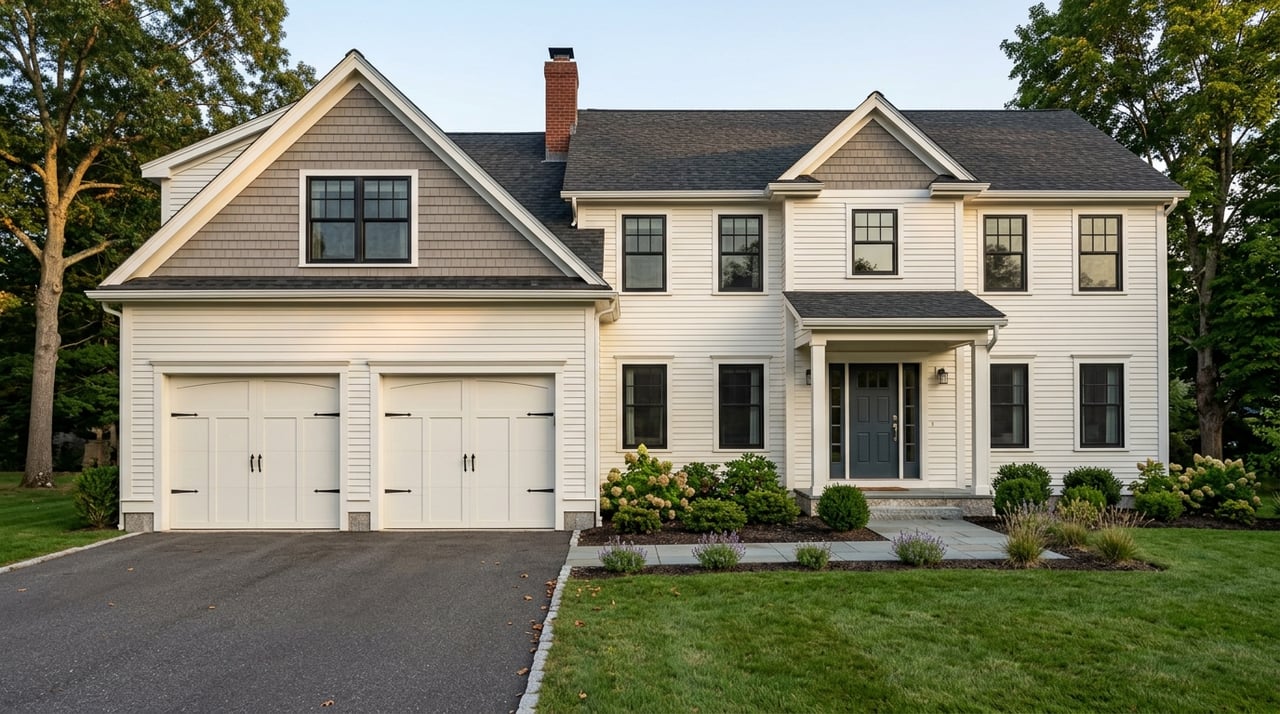
South Shore Move-Up Sellers: How to Plan the Next Step
If you own a home on the South Shore and feel ready for more space, a different layout, or a new town, you are not alone. The challenge is that a move-up sale in today’s market is not just about selling high. It is also about buying into a very different price band while mortgage rates still keep monthly payment math front and center. This guide walks you through what current South Shore housing trends mean for move-up sellers, how key towns compare, and how to think about timing your next step with more confidence. Let’s dive in.
The statewide housing market in Massachusetts looked balanced in May 2026, but that does not mean buyers have broad leverage. There were 16,700 homes for sale statewide, the median listing price was $729,000, median days on market were 22, and the sale-to-list ratio was 100%.
For you as a move-up seller, that backdrop matters. Homes are still turning over relatively quickly, and limited supply continues to shape decisions. In practical terms, your current home may sell well, but your replacement home may also come with strong competition.
One of the biggest misconceptions about moving up is that it simply means getting a bigger house. On the South Shore, it often means moving into a different pricing tier entirely, and sometimes a different town with a very different budget.
That is why your strategy needs to start with the gap between what you can likely sell for and what you will likely need to spend next. The numbers show that clearly.
Weymouth remains one of the more accessible South Shore markets for move-up sellers. Realtor.com shows 85 homes for sale, a median listing price of $660,000, 17 median days on market, and a 101% sale-to-list ratio.
Even within Weymouth, the pricing spread is meaningful. East Weymouth has a median around $589,000, Weymouth Landing around $649,000, South Weymouth around $667,000, North Weymouth around $739,950, and Columbian Square around $752,450.
That range is useful because it shows how first-step and next-step homes can exist in the same town. If you are already in Weymouth, your move-up path may not require a town change, but it still may require a much higher budget than expected.
Plymouth can be a useful middle option if you want more space without immediately jumping into the top end of the South Shore market. It has 231 homes for sale, a median listing price around $750,000, and 26 median days on market.
Compared with tighter premium markets, Plymouth gives you more inventory to work with. That can create more flexibility if your goal is to move up in home size or features while staying closer to a mid-priced purchase range.
Hingham and Norwell sit in a very different part of the ladder. Hingham has 63 homes for sale, a median listing price of $1.699 million, 16 median days on market, and a 104% sale-to-list ratio. Norwell has 29 homes for sale, a median listing price of $1.6725 million, 28 median days on market, and a 99% sale-to-list ratio.
These are not just modest step-ups from markets like Weymouth. They represent a major jump in replacement cost, and that affects everything from down payment planning to your comfort with monthly housing costs.
The price gap between South Shore tiers is large enough to shape your entire plan. Moving from Weymouth’s $660,000 median listing price to Hingham’s $1.699 million median is about a $1.039 million jump. Moving from Weymouth to Norwell is about a $1.013 million jump.
If your current home lines up more closely with East Weymouth’s $589,000 median, the gap to Hingham grows to about $1.11 million. That means even if you have built solid equity, you may still be facing a seven-figure step-up to buy your next home.
This is why move-up planning has to go beyond rough estimates. You need to understand your likely sale price, your estimated net proceeds, and how those proceeds fit into your replacement budget.
A lot of homeowners focus first on equity, which makes sense. But monthly payment is still a major part of the decision, especially with mortgage costs where they are now.
Freddie Mac reported the average 30-year fixed mortgage rate at 6.47% on June 18, 2026. For move-up sellers, that rate environment can make a large difference in affordability, even when your current home has appreciated significantly.
In other words, having enough equity to make the next purchase possible does not always mean the new payment will feel comfortable. Before you list, it helps to evaluate both your likely cash to close and your likely future monthly payment.
For many move-up sellers, the hardest part is not pricing. It is sequencing. You need to decide whether to sell first, buy first, or try to line both transactions up at the same time.
A common approach is simultaneous timing with either a contingent sale or a bridge loan. That framework is especially relevant on the South Shore because the sale of your current home often becomes the event that unlocks the next purchase.
Selling first can reduce financial pressure. You know what your home actually sold for, you know your proceeds, and you can shop for the next property with a clearer budget.
This can be the cleaner choice when the move-up gap is large, especially if you are jumping from a mid-priced market into towns like Hingham or Norwell. It may also help you avoid stretching too far based on projected numbers that have not become real yet.
A contingent sale can make sense when you need proceeds from your current home to complete the next purchase. In a market where homes still move relatively quickly, this can work with careful coordination and realistic expectations.
That said, success often depends on pricing your current home correctly from day one. If your sale is the financing event behind your next purchase, delays or price reductions can ripple through the whole plan.
South Shore move-up sellers do not just need a sale. They need a sale that supports the next move.
Local market numbers reinforce that point. Hingham homes are selling at 104% of list price, Weymouth at 101%, and Norwell at 99%. Plymouth is also closer to parity than the most competitive premium towns.
Those figures tell you two things. First, well-positioned homes can still attract strong buyer response. Second, overpricing can create friction you may not be able to afford if your next purchase depends on timely proceeds.
It can be tempting to view home equity as an easy solution during a transition. In reality, equity tools deserve careful thought.
The Consumer Financial Protection Bureau explains that a home equity loan is a lump-sum loan against your home equity and a HELOC is a revolving line of credit. If you already have a first mortgage, both are second mortgages.
The same source also warns that these loans add debt and can put your home at risk if they are not repaid. For move-up sellers, that makes them better viewed as transition tools rather than casual sources of cash.
If you are thinking about moving up on the South Shore, focus on these steps first:
A move from Weymouth to another part of Weymouth is different from a move from Weymouth to Hingham or Norwell. A move into Plymouth may offer more inventory and a different pace than a move into a premium, faster-moving town.
That is why local market knowledge matters so much. You need more than a general idea of home values. You need a clear understanding of how pricing, timing, competition, and replacement options come together in the towns you are actually considering.
A strong listing strategy also plays a real role here. Professional presentation, thoughtful staging guidance, strong photography, and smart exposure can help support the sale price and timeline you need when your next purchase depends on it.
If you are planning your next move on the South Shore, the best first step is a conversation about your current home, your likely equity position, and the price band you want to enter next. To start building a clear move-up plan, schedule a free consultation with Matthew Langlois.




From start to finish, Matthew will be your advocate, ensuring a smooth transaction that fits your timeline. He has a genuine love for what he does and takes pride in helping his clients achieve their goals.