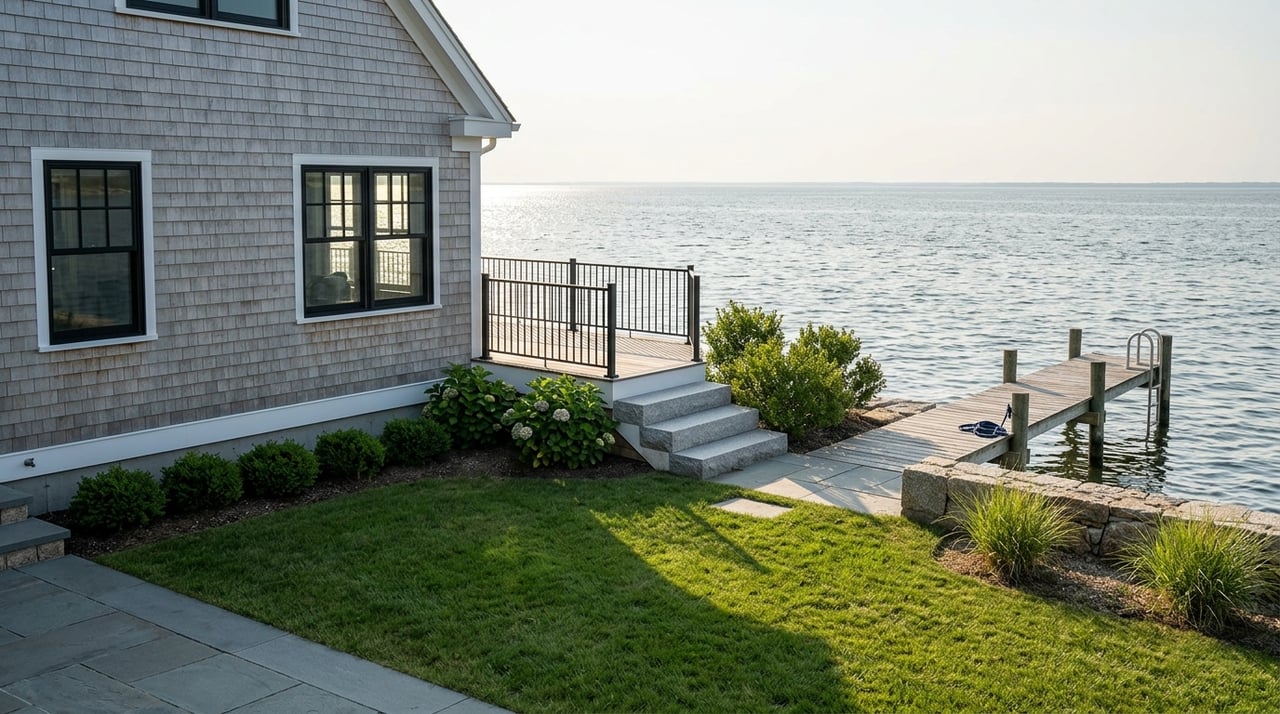
Understanding the Cohasset Waterfront Homes Lifestyle
If you are dreaming about waterfront property in Cohasset, it helps to look past the view and understand how coastal ownership really works. Buyers are often drawn in by the harbor, beaches, and classic South Shore setting, but the day-to-day reality can include flood zones, limited shoreline access, boating wait lists, and seasonal permit rules. When you know what to look for, you can make a smarter decision and buy with more confidence. Let’s dive in.
Cohasset is one of the South Shore’s most premium coastal markets. According to Zillow’s Cohasset home value data, the average home value was about $1,429,966 as of March 31, 2026, and the median list price was $1,851,833.
Waterfront inventory tends to sit above the broader town market. The same market snapshot and Redfin’s waterfront page referenced in the research indicate waterfront homes were listed around a $2 million median, which supports the basic takeaway that direct waterfront ownership usually commands a premium over townwide pricing.
That said, not every coastal property is priced the same way. A direct harborfront home, a property with water views, and a home with beach or boating access rights can have very different value drivers depending on lot position, condition, and access details.
Cohasset is a small market, and that matters when you are interpreting pricing. The research shows Redfin’s February 2026 market snapshot reported a median sale price of $1.41 million, an average of 21 days on market, and just 5 homes sold that month.
With that few sales, short-term percentage changes can be noisy. For you as a buyer, that means list prices and recent comparable sales need to be read carefully, especially in a niche category like waterfront property where each home may offer a very different mix of location, views, flood exposure, and access.
A big part of Cohasset’s appeal is its active harbor. The town describes Cohasset Harbor as a working harbor with a current lobster fishing fleet, along with boating, sailing, kayaking, and paddle boarding.
The harbor includes five public docks, kayak-specific docks at Parker Avenue and Lawrence Wharf, a public boat ramp at Parker Avenue, and a marina with 75 slips. The harbor area also includes the Cohasset Yacht Club, Cohasset Sailing Club, and Cohasset Maritime Institute, which reinforces how central boating is to the local waterfront experience.
For buyers, that boating culture is a real advantage, but it also comes with limits. The town’s master plan says the harbor has been at capacity for some time, with about 300 recreational and commercial boats and long waiting lists for slips and moorings.
Scarcity is a major theme in Cohasset waterfront living. The same master plan notes that Cohasset has 6.12 miles of shoreline, but only 3.4% is publicly owned, the smallest share of public coastal frontage in the South Shore region from Weymouth to Plymouth.
That number matters because it changes how you should think about location. In Cohasset, access rights, parking, permit rules, and boating logistics can be just as important as the view itself.
The town says Sandy Beach is the most popular swimming beach, Black Rock Beach is smaller, and Bassings Beach is accessible only by boat. The harbor page also notes that Bassing Beach is used by residents and transient boaters, which helps explain why the harbor can feel especially active during the summer season.
If you want a coastal lifestyle with more day-to-day convenience, location within town matters. Cohasset’s Housing Production Plan identifies the Village and Harbor areas as walkable and close to amenities.
The same plan notes that the northern part of Route 3A is close to the commuter rail station and retail. For buyers who want both water proximity and easier access to shops, services, or transportation, those parts of town may offer a different experience than more tucked-away shoreline locations.
In Cohasset, flood risk is not a side issue. It is one of the core parts of waterfront ownership.
The town’s wetlands and floodplains page explains that floodplains are typically Zone A and sometimes Zone V in coastal areas. FEMA also states that Special Flood Hazard Areas include zones such as A, AE, and V, and that mandatory flood insurance purchase requirements can apply in those areas.
Massachusetts does not require flood insurance by state law, but Mass.gov’s flood insurance guidance makes clear that standard homeowners insurance does not cover flood damage. It also notes that lenders usually require flood insurance when a mortgage is involved.
For you, that means a waterfront home’s true monthly cost may include more than mortgage, taxes, and maintenance. Flood coverage may be a meaningful part of the carrying cost, especially for homes in or near mapped hazard areas.
One of the biggest mistakes buyers can make is assuming a neighborhood description tells the whole story. Being “waterfront,” “near the harbor,” or “water view” does not tell you exactly how a specific parcel is mapped or how it may be affected by local conditions.
Cohasset maintains updated FEMA flood map sheets, and FEMA says owners can request a formal flood zone determination if they believe a property has been mapped incorrectly. That is why parcel-specific review is much more useful than broad assumptions.
A local example helps show why this matters. A Massachusetts environmental review for the Parker Avenue boat ramp identified that site as being in FEMA Zone AE and noted that the ramp works only at higher tides unless extended. While that is not a residential parcel study, it shows how tide and floodplain conditions shape the harbor edge.
If you are buying a primary home, second home, or legacy property, it is worth looking beyond current conditions. Massachusetts provides a sea-level rise and coastal flooding viewer that layers FEMA coastal flood zones with modeled 2030, 2050, and 2070 scenarios.
That kind of planning tool can help you think more clearly about long-term ownership. It is especially useful if you expect to hold the property for many years or want a better sense of how future coastal conditions could affect use, insurance, or resale.
In many coastal towns, ownership and access are not exactly the same thing. Cohasset is a good example.
The town’s 2026 All Facilities permit rules cover Sandy Beach, Government Island, the Parker Avenue boat ramp, and Wadleigh Park. The rules say permits are valid from April 1 to March 31, sales begin around March 15, and non-resident homeowners, including second-home and summer-home owners, have special permit pathways.
The same rules also state that no guest, nanny, family, or daily-use permits are issued. For buyers, that is a practical reminder that beach access, parking, and recreational use are regulated parts of the ownership experience, not just informal perks.
If boating is part of your plan, it is smart to ask specific questions early. The town’s harbor rules and regulations note that Cohasset Harbor and Little Harbor are no-wake zones.
The same rules explain that the Parker Avenue ramp has limited trailer parking tied to resident town-sticker parking. Since the master plan also says the only public boat launch is at Parker Avenue, access logistics can have a real impact on how convenient boat ownership feels in practice.
Many buyers look at older waterfront homes and see upside through renovation or expansion. That may be possible, but coastal properties often come with more regulatory review than inland homes.
Cohasset’s wetlands and floodplains guidance says the town regulates wetlands, floodplains, beaches, tidal flats, dunes, banks, and coastal beaches. If you are considering an addition, drainage work, shoreline improvements, or other changes, it is important to understand those requirements before you buy.
This is especially relevant if a property has deferred maintenance or if your plan depends on changing the footprint, improving access, or adding outdoor features near the shoreline.
Before you move forward on a Cohasset waterfront purchase, make sure you are looking at the full picture, not just the photos and location.
A strong due diligence checklist may include:
In a market like Cohasset, scarcity and rules shape value. The right property can be an exceptional fit, but it pays to understand how the harbor, shoreline, and permitting framework affect everyday ownership.
If you are weighing a waterfront purchase on the South Shore and want practical guidance grounded in local market realities, connect with Matthew Langlois. His straightforward, hands-on approach can help you evaluate the property, the numbers, and the tradeoffs so you can move forward with clarity.




From start to finish, Matthew will be your advocate, ensuring a smooth transaction that fits your timeline. He has a genuine love for what he does and takes pride in helping his clients achieve their goals.